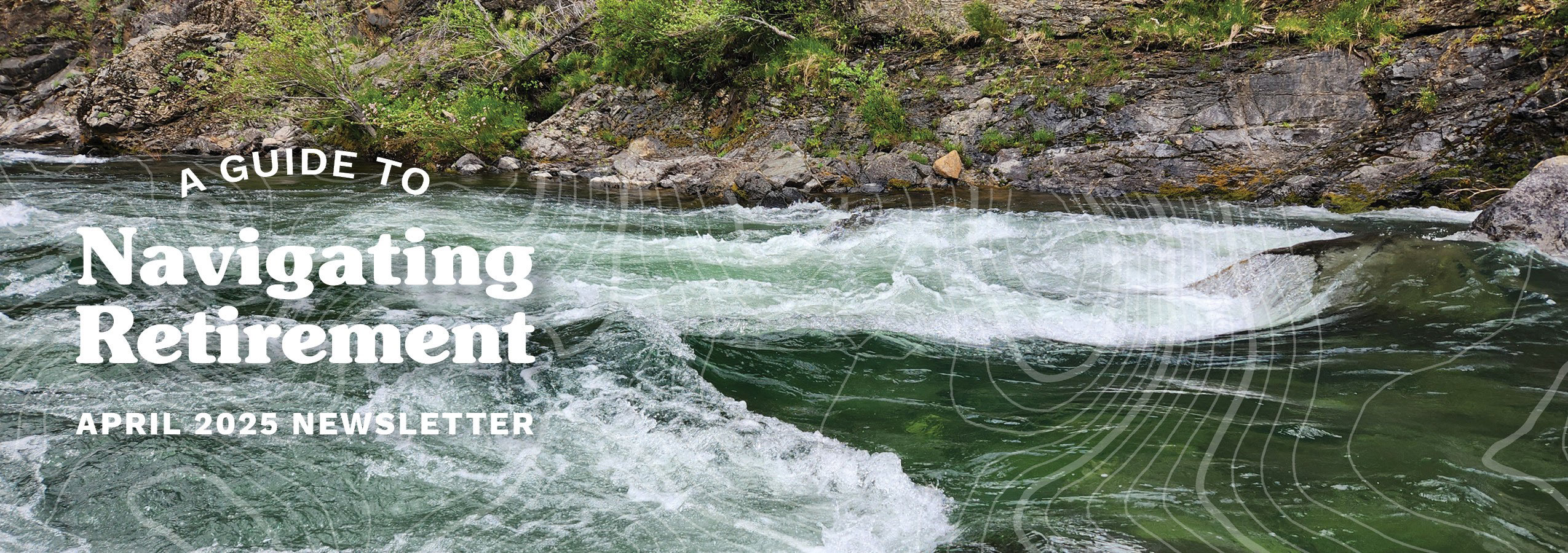
The stretches of whitewater rivers I usually drift are characterized as “pool and drop”: alternating sections of calm, deep water and steeper, turbulent descents.
The drop in the river may have a waterfall of many feet with water at the boom flowing back upstream creating a “hole” that can trap your raft, bucking it as if you are riding a bull—if it does not flip the boat and send you swimming.
The actual me it takes to run a rapid can be mere seconds. The brevity belies the potential danger.
We encounter similar dangers every day in life. The big difference is that on a river, the presence of the danger is very obvious. In life, an obvious peril is often missed, ignored, or underestimated.
Or the descent may be over a long stretch of water with narrow channels through a boulder strewn maze that requires precise maneuvering. Water may be flowing over partially submerged rocks that can ground your raft, leaving you stuck in the middle of the river.
Challenging rapids raise my heart rate considerably. The awesome power of tons of swift flowing water has primary control over my raft.
Did I pick the best route through the danger?
A car accident narrowly avoided is a non-river experience that shares the same immediate and very brief moment of impending peril that running a river rapid elicits.
A car ran a red light and just misses you. You skid on icy pavement and your car stops just short of a telephone pole. Maybe there is a collision, but air bags deploy and no one is hurt. There are a number of scenarios in which the possibility of bodily harm from an auto accident were happily avoided.
How often do you focus on the danger of driving in a car when you open its door? You consciously follow safe driving habits, obey traffic laws, use caution in adverse weather conditions, and keep your vehicle well maintained. (The guy in the other car poses risk you cannot control.)
You drive or ride in a vehicle so frequently that the inherent danger of driving usually does not create anxiety. That is not the case with many stresses in modern life.
One source of prolonged anxiety for many people is when the financial markets decline precipitously due to a sharp sell off in security prices. Do you recall the five different declines of 20% or greater in the S&P 500 since 2000—two of which were at least 50%?
Did you think your hopes and dreams were at risk because of the decline in the value of your portfolio? Did you sell stocks in the teeth of the decline?
Just as there is no activity that can have a greater impact on your health than exercise, no activity can have a greater impact on your financial health than a
Cash Flow Study.
Investing can involve a number of risks such as loss of purchasing power, interest rate changes, credit failures, illiquidity, business cycles, currency fluctuations, geopolitics, price volatility, opportunity costs, and outliving your savings.
Certain investments allow you to trade off some of these risks by accepting other risks on the list. To a great degree, investing is a decision about which risks you think the least onerous!
You may not be able to eliminate the anxiety that comes from investing, but you can keep it in proper perspective. I suggest you review Topic #14 in
A Guide to Navigating Retirement: a discussion about a Cash Flow Study.
Just as there is no activity contemplated by the Guide that can have a greater impact on your health than exercise (and thus your enjoyment of life), there is no activity that can have a greater impact on your financial health (and that can reduce your stress levels during a turbulent financial market) than undertaking a Cash Flow Study.
Use conservative market assumptions in your Cash Flow Study: low investment returns, high rates of inflation, long life expectancy, and realistic spending targets. During economic and market volatility, a Cash Flow Study will show you the degree to which a “buffer” exists within your portfolio to “weather the storm”. The Study can illustrate “worst case” scenarios that can then be compared to your current financial plan.
No one should be surprised that the stock market goes down. When it goes down and by how much, that is the surprise. Investors make money by investing in the stock market
because of the risk, not
despite the risk.
Consider your tolerance to accept the risk of investing in stocks before you buy stocks!
A Cash Flow Study is the best way to determine the adequacy of your investment savings and to evaluate various investments strategies that might minimize market volatility. A Study can help you determine an appropriate allocation of stocks, bonds, and cash for your retirement savings.
No one should be surprised that the stock market goes down, only when and by how much!
assumptions about investment performance project the growth or your portfolio at a consistent rate return every year—which does not happen in real life. In next month’s newsletter, I will discuss the Monte Carlo Simulation, a way to see the impact of the variability in annual investment returns. I will introduce the Bucket Strategy, a portfolio management tool particularly useful for minimizing your anxiety about economic and market uncertainties.